Bird Bits
Bald Eagles Return to South Louisiana
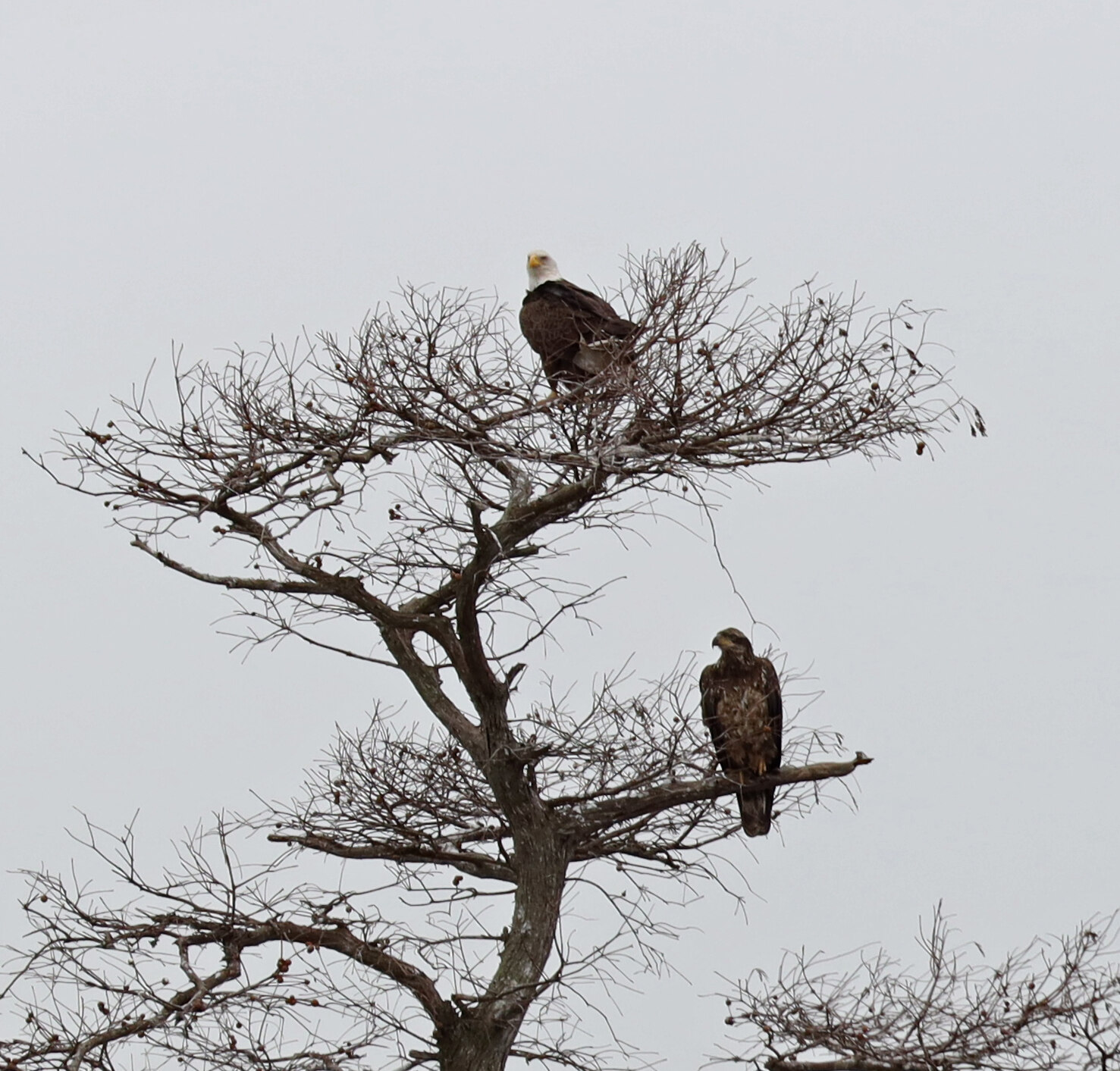
Bald Eagles are returning to south Louisiana. I saw my first eagle of the fall soaring over Highway 1 during the third week of September. As I watched it circle overhead, I could not help wondering where it had spent the summer and how far it had traveled to return.
Louisiana's Bald Eagle nesting season begins when pairs reunite in late fall. Eggs are generally laid before Christmas, and another three months or more may pass before the young eagles make their first flights.
The Bald Eagle is one of conservation's great success stories. By the early 1970s, Louisiana's population had fallen to only eight known nesting pairs. Protection of nesting habitat, restrictions on harmful pesticides, and the work of the Louisiana Department of Wildlife and Fisheries, the U.S. Fish and Wildlife Service, the American Eagle Foundation, and other conservation organizations helped the population recover. By 2011, Louisiana supported more than 350 nesting pairs.
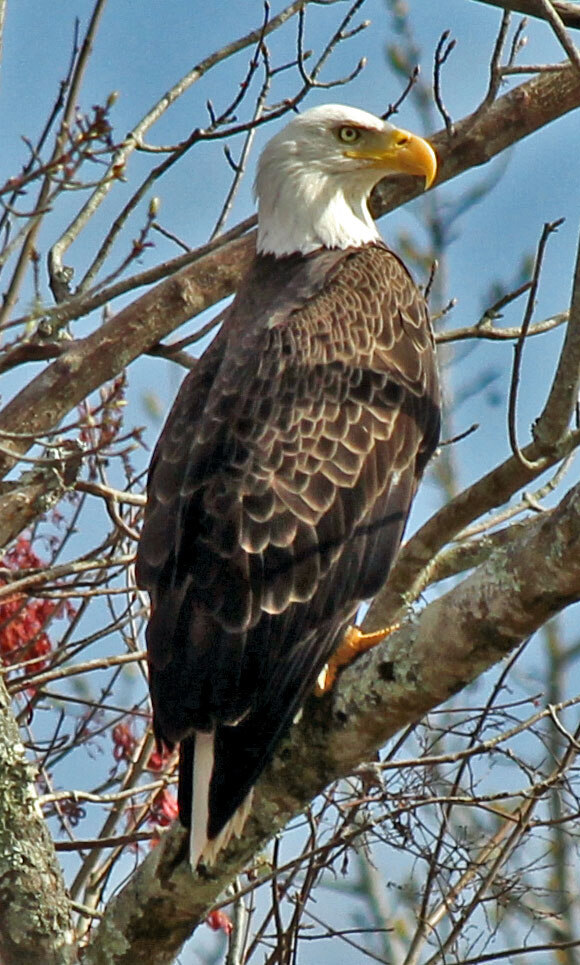
During last year's annual Big Sit at the Plaquemine Lock State Historic Site, we recorded Bald Eagles on ten occasions. We undoubtedly saw some of the same birds more than once, but at one point three adults were visible together, with at least one younger eagle nearby. Young Bald Eagles do not acquire the familiar white head and tail until they are about four or five years old. In this case, “bald” comes from an older word meaning white—not from a lack of feathers.
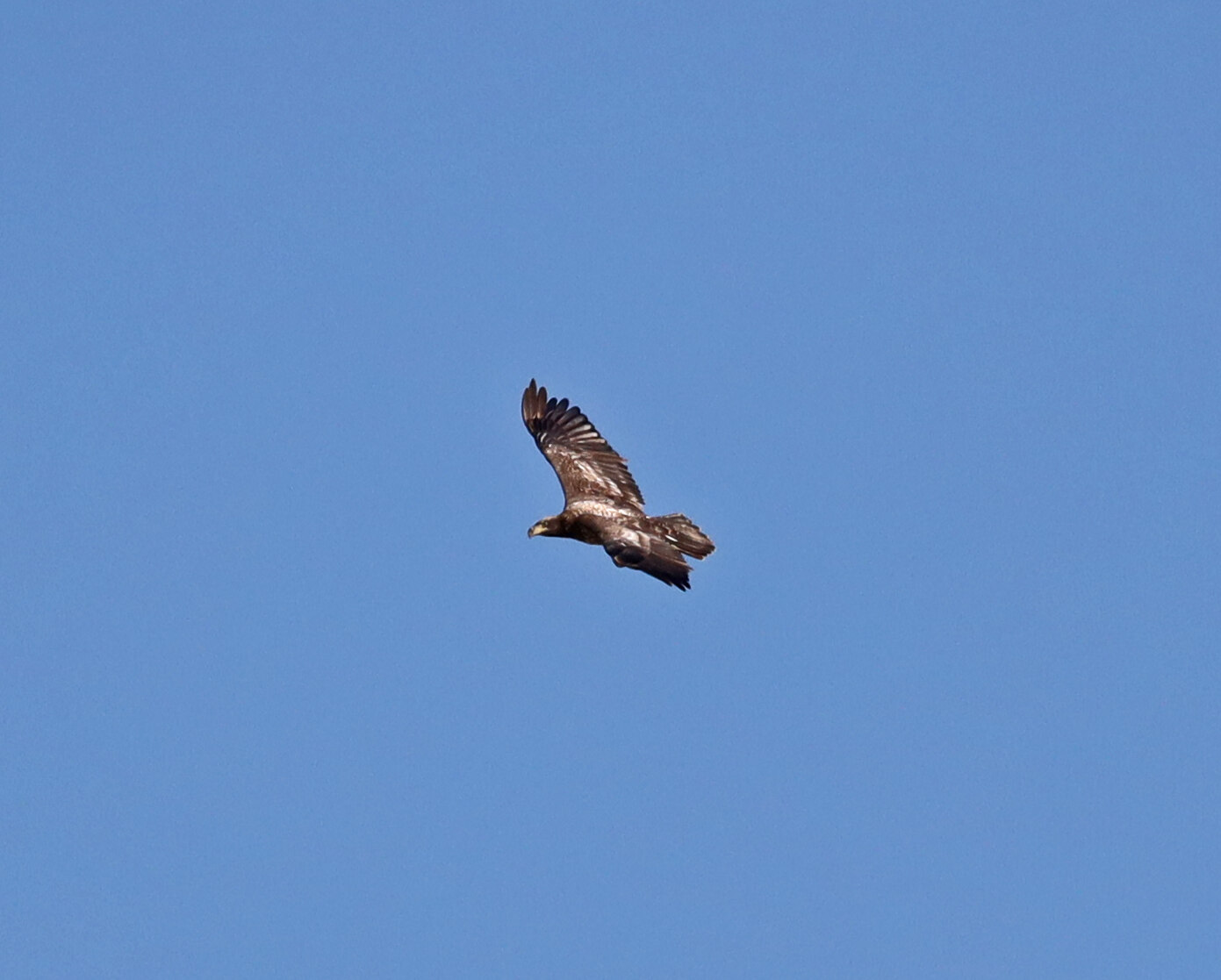
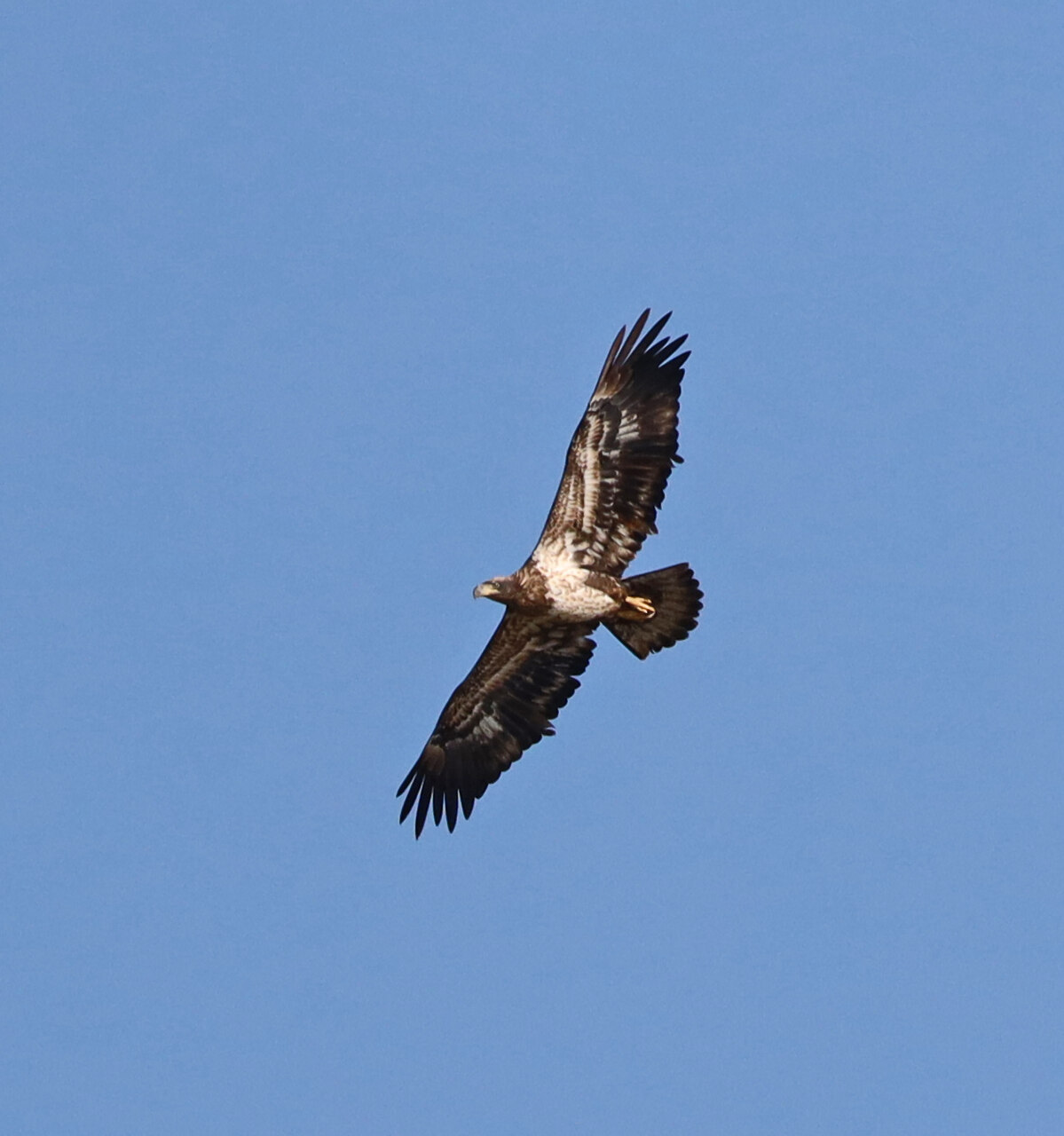
Graduate student Mike Smith was studying eagles in south Louisiana and fitting some birds with satellite transmitters to learn where they went during the summer. Bald Eagles are seldom seen in the southern part of the state from early June through early September. Early tracking results from five birds showed that individuals followed different routes to widely scattered northern destinations, including Saskatchewan and Quebec. One feature united many of those destinations: clear water and good fishing.
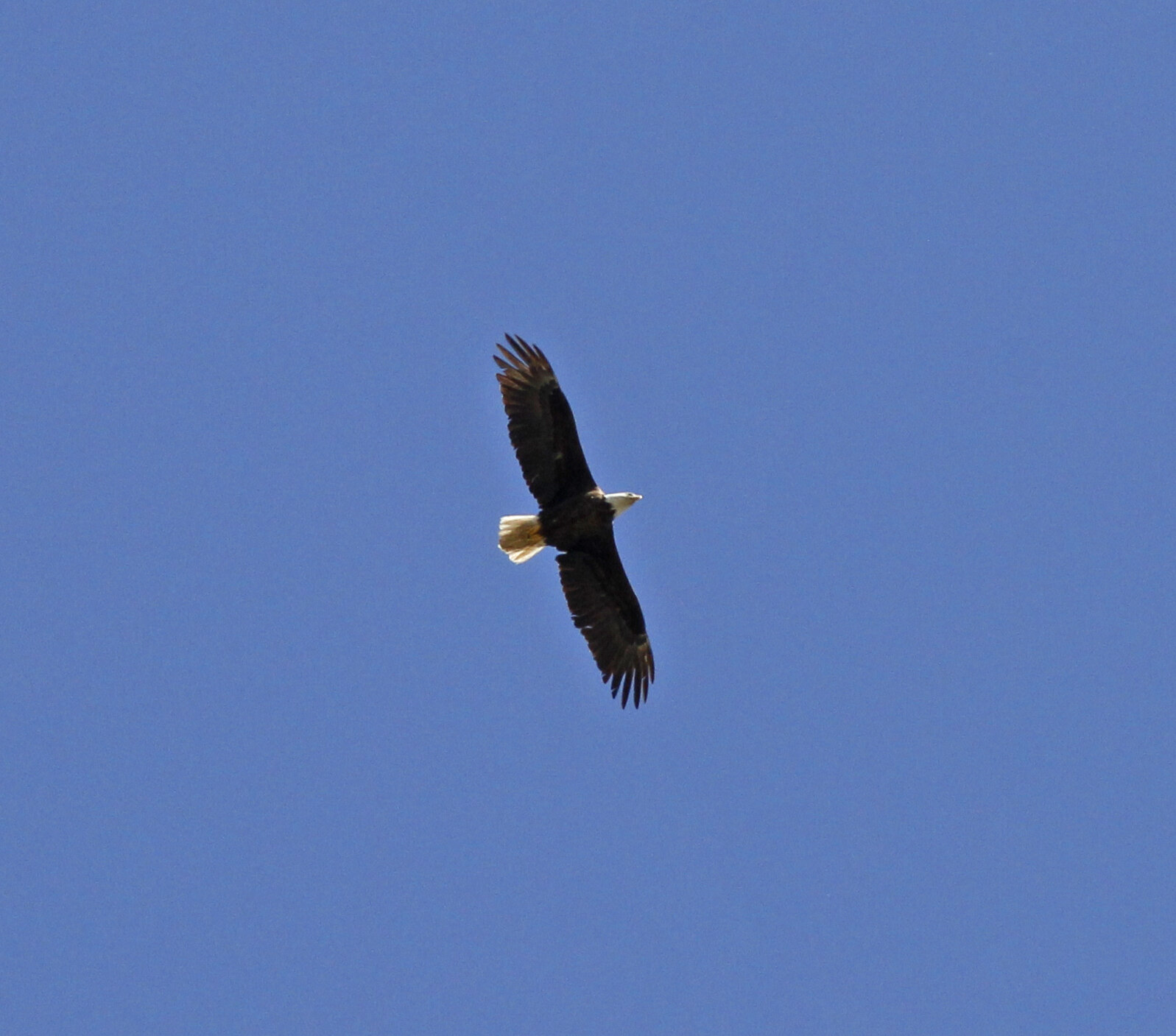
Fish make up much of a Bald Eagle's diet, although eagles also eat carrion. That habit helped inspire Benjamin Franklin's famous complaint that the species was not an ideal national symbol. It also contributes to occasional accusations that eagles kill lambs or newborn calves, even when the birds may simply be feeding on animals that were already dead.
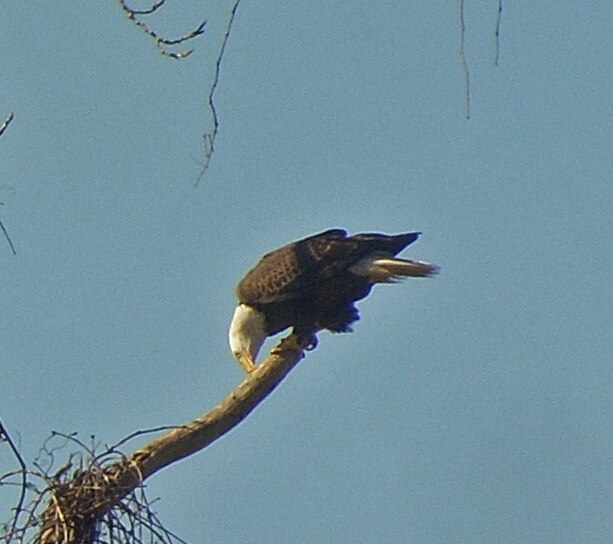
The eagle I watched over Highway 1 may have returned from a northern lake hundreds of miles away. Wherever it had been, its arrival was a welcome sign that fall—and another Bald Eagle nesting season—was beginning in Louisiana.